
In today’s competitive digital world, getting new customers is harder and more expensive than ever. Ads cost more, competition is high, and customers have many choices. That’s why smart brands focus not only on gaining new customers but also on keeping the ones they already have. This is where retention marketing comes in.
Retention marketing is about building long-term relationships with customers so they continue to buy from you again and again. Instead of chasing new customers all the time, brands use retention marketing to increase loyalty, trust, and profits.
In this article, we’ll explain retention marketing in simple words, why it matters, and how brands use it to grow their business.
What Is Retention Marketing?
Retention marketing is a strategy that focuses on keeping existing customers engaged, happy, and loyal after they make their first purchase.
Instead of saying, “How can we gain more new customers?” retention marketing focuses on asking, “How can we ensure our existing customers continue to return?”
Examples of retention marketing include:
- Sending follow-up emails
- Offering discounts to repeat customers
- Rewarding loyal customers
- Providing excellent customer support
- Sharing helpful content after purchase
The goal is simple: turn one-time buyers into long-term customers.
Why Retention Marketing Is Important
Retention marketing is important because existing customers are more valuable than new ones.
Here’s why:
Lower Marketing Costs
It can cost five times as much to acquire new clients as it does to keep current ones. Retention marketing yields higher returns while requiring fewer resources.
Higher Profits
Repeat customers are more likely to buy again and often spend more over time. This increases customer lifetime value.
Builds Trust and Loyalty
Customers who feel valued are more loyal. Loyal customers trust your brand and choose you over competitors.
More Word-of-Mouth Marketing
Happy customers recommend your brand to friends and family, bringing free and high-quality leads.
Retention Marketing vs Acquisition Marketing
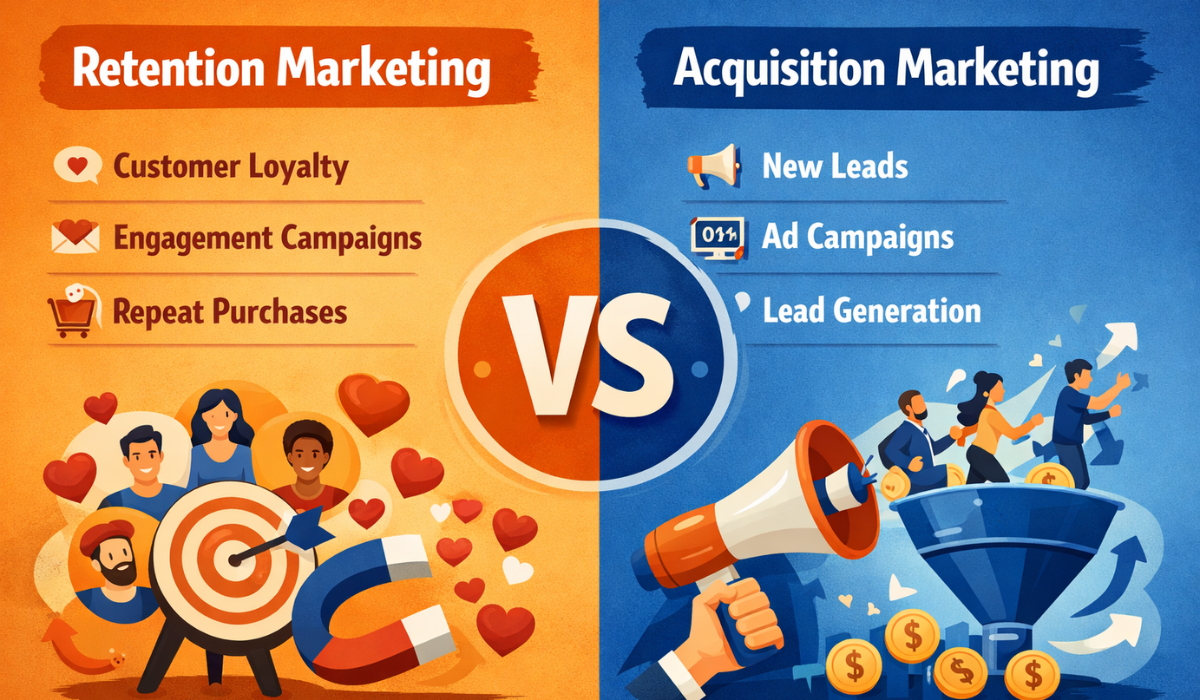
| Retention Marketing | Acquisition Marketing |
| Focuses on existing customers | Focuses on new customers |
| Lower cost | Higher cost |
| Long-term growth | Short-term growth |
| Builds loyalty | Builds awareness |
Both strategies are important, but retention marketing delivers stronger long-term results.
Key Elements of Retention Marketing
To succeed with retention marketing, brands focus on these key areas:
Customer Experience
A smooth and positive experience keeps customers happy.
This includes:
- Easy website navigation
- Fast checkout
- Helpful customer support
- Quick problem resolution
If customers enjoy doing business with you, they will come back.
Personalized Communication
Customers don’t want generic messages. They prefer personalized emails, offers, and recommendations based on their interests and behavior.
Examples:
- Product recommendations based on past purchases
- Birthday or anniversary offers
- Personalized emails using the customer’s name
Consistent Engagement
Staying connected with customers is essential. Brands use emails, social media, and content to stay top-of-mind without being annoying.
Effective Retention Marketing Strategies
Let’s look at some proven retention marketing strategies brands use to build loyalty and increase profits.
Email Marketing
One of the most effective retention strategies is email marketing.
Brands use email to:
- Send welcome emails
- Share updates and offers
- Provide useful content
- Remind customers about abandoned carts
Regular, valuable emails help maintain strong customer relationships.
Loyalty Programs
Loyalty programs reward customers for repeat purchases.
Examples include:
- Points for every purchase
- Exclusive discounts
- Early access to sales
- Special rewards for long-term customers
These programs encourage customers to keep buying from the same brand.
Customer Feedback and Surveys
Asking clients for feedback demonstrates that you value their opinions.
Benefits:
- Helps improve products and services
- Makes customers feel valued
- Builds stronger relationships
Brands that listen to their customers grow faster and retain them longer.
Quality Customer Support
Good customer support is a powerful retention tool.
Fast responses, friendly service, and helpful solutions can turn a bad experience into a loyal customer.
Customers remember how you treat them when something goes wrong.
Educational and Helpful Content
Content marketing isn’t just for attracting new customers. It’s also great for retention.
Brands share:
- How-to guides
- Tips and tutorials
- Product usage advice
- Industry insights
Helpful content keeps customers engaged and builds trust.
Special Offers for Existing Customers
Exclusive deals make customers feel appreciated.
Examples:
- Repeat customer discounts
- VIP offers
- Limited-time deals for subscribers
These offers encourage repeat purchases and strengthen loyalty.
How Retention Marketing Builds Brand Loyalty
Brand loyalty happens when customers choose your brand again and again, even when competitors offer similar products.
Retention marketing builds loyalty by:
- Creating emotional connections
- Delivering consistent value
- Rewarding long-term customers
- Making customers feel special
When customers trust your brand, price becomes less important, and loyalty increases.
How Retention Marketing Increases Profits
Retention marketing directly impacts profitability in several ways:
Higher Customer Lifetime Value
Retained customers spend more over time, increasing total revenue per customer.
Reduced Churn
Churn is when customers stop buying from you. Retention strategies reduce churn and stabilize revenue.
Increased Upselling and Cross-Selling
Existing customers are more open to buying additional or upgraded products.
Better Return on Investment
Retention marketing campaigns often deliver higher ROI than paid advertising.
Retention Marketing Metrics to Track

To measure success, brands track these metrics:
- Customer Retention Rate
- Repeat Purchase Rate
- Customer Lifetime Value
- Churn Rate
- Email Open and Click Rates
- Loyalty Program Participation
Tracking these numbers helps improve strategies over time.
Common Retention Marketing Mistakes to Avoid
Even good strategies can fail if mistakes are made.
Avoid these common errors:
- Ignoring existing customers
- Sending too many emails
- Not personalizing communication
- Offering poor customer support
- Focusing only on discounts instead of value
Retention marketing works best when it focuses on relationships, not just sales.
Retention Marketing for Small and Large Businesses
Retention marketing is not just for big brands.
Small Businesses
- Build personal relationships
- Offer personalized service
- Focus on community engagement
Large Businesses
- Use automation and data
- Segment customers
- Scale loyalty programs
No matter the size, retention marketing helps businesses grow sustainably.
Future of Retention Marketing
Retention marketing is becoming even more important as competition increases.
Future trends include:
- AI-driven personalization
- Automated customer journeys
- Predictive analytics
- Omnichannel engagement
Brands that invest in retention today will stay ahead tomorrow.
Conclusion
Retention marketing is no longer optional—it’s essential for long-term business success. By focusing on existing customers, brands can build strong relationships, increase loyalty, and boost profits without constantly spending more on ads.
When done right, retention marketing turns customers into brand advocates who trust your business and support your growth.
If you want sustainable growth, better profits, and loyal customers, retention marketing is the strategy you should focus on today.
FAQ’s
How does retention marketing help increase profits?
Retention marketing increases profits by encouraging repeat purchases, reducing customer loss, and lowering marketing costs. Loyal customers spend more over time and are easier to sell to, which improves customer lifetime value and delivers a higher return on investment for businesses.
Is retention marketing better than acquisition marketing?
Retention marketing is not better, but it is more cost-effective for long-term growth. While acquisition brings new customers, retention focuses on existing ones. Businesses succeed when they balance both strategies, using retention to stabilize revenue and acquisition to expand reach.
Which businesses should use retention marketing strategies?
Retention marketing works for all businesses, including startups, small businesses, e-commerce brands, and large companies. Any business with repeat customers can benefit by building loyalty, improving customer experience, and increasing lifetime value through consistent engagement and personalized communication.
How long does it take to see results from retention marketing?
Retention marketing does not deliver instant results like paid ads. Businesses usually see noticeable improvements in engagement, repeat purchases, and loyalty within a few months. Long-term consistency leads to stronger customer relationships and sustainable revenue growth over time.
What tools are commonly used for retention marketing?
Common retention marketing tools include email marketing platforms, CRM software, loyalty program tools, customer feedback systems, and analytics dashboards. These tools help businesses track customer behavior, personalize communication, and improve engagement across multiple channels effectively.
Can retention marketing work without offering discounts?
Yes, retention marketing works even without discounts. Brands can retain customers by providing excellent support, personalized experiences, helpful content, loyalty rewards, and strong communication. Emotional connection and trust often matter more than price when building long-term customer loyalty.