
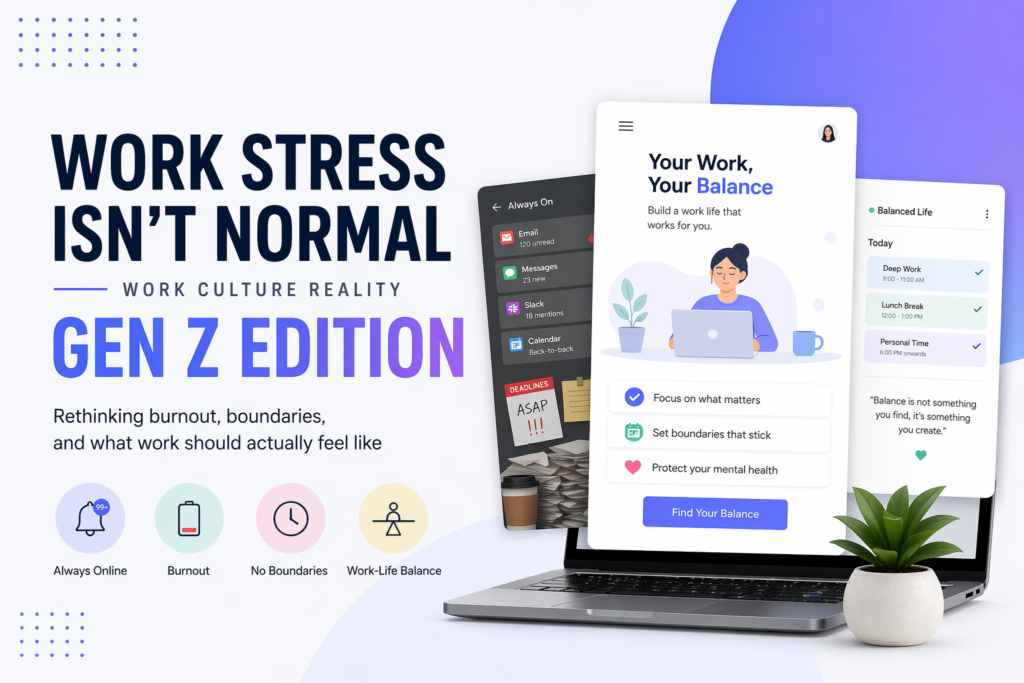
Around 75% of U.S. adults experience stress, the American Institute of Stress reports in 2025. The American Psychological Association’s 2025 Work in America survey found that U.S. workers report significant stress due to job insecurity. Work culture today is not just about tasks and deadlines. It has slowly turned into something that follows people everywhere.
Messages come in after hours, expectations stretch beyond job descriptions, and switching off from work feels almost impossible. For many people, especially younger professionals, stress is no longer occasional. It has become a constant background feeling.
This naturally leads to a question people are increasingly asking: Can you sue your job for stress you are experiencing?
But for most people, the real issue is not legal. It is cultural.
Work Culture Is the Real Problem
Most employees are not struggling because work exists. They are struggling because of how work is structured and expected to fit into their lives. There is an unspoken pressure to always be available, to respond quickly, and to prove productivity constantly. Over time, this creates an environment where rest feels undeserved and boundaries feel risky.
What used to be considered “hard work” is now often just poor work culture. When there is no clear separation between personal time and professional responsibility, stress builds up in a way that is not sustainable. People are not just tired. They are mentally drained.
Why This Feels Different for Gen Z
There is a noticeable shift in how younger professionals approach work. Gen Z, in particular, is less willing to accept stress as a normal part of success. They are questioning systems that reward overworking and ignore well-being.
Instead of chasing burnout-driven productivity, they are prioritizing balance, flexibility, and mental health. This does not mean they do not want to work hard. It means they are more aware of the cost of working without limits.
This shift is forcing companies to rethink how they operate, even if slowly.
When Stress Becomes a Warning Sign
Not all stress is harmful. Some pressure can help people grow and perform better. The problem begins when stress becomes constant and starts affecting daily life.
When work stress begins to impact sleep, mood, relationships, or physical health, it is no longer something to ignore. Feeling anxious before starting work, being unable to disconnect after hours, or constantly feeling like nothing is enough are signs that the environment may not be healthy.
At that point, the issue is not about handling stress better. It is about recognizing that something is wrong with the situation itself.
Where Legal Boundaries Still Exist
Even though most workplace stress is tied to culture, there are still clear legal lines that employers cannot cross.
It is against the law to fire someone for unlawful reasons such as their ethnicity, whether they are a whistleblower, whether they become pregnant, or because they report an instance of sexual harassment or workplace discrimination, according to Roseville employment lawyer Jeremy S. Millstone.
If stress is caused by situations like discrimination, harassment, or unsafe working conditions, it goes beyond culture and becomes a rights issue. In those cases, taking action is not just about personal well-being but also about accountability.
The Cost of Ignoring Work-Life Balance
One of the biggest problems today is how easily people normalize stress. What starts as a temporary phase often turns into a long-term pattern.
Over time, this can lead to burnout, anxiety, lack of motivation, and even physical health issues like fatigue or headaches. Many people continue pushing through it, assuming it is part of professional growth, but the long-term impact is much heavier than it seems in the moment.
When work begins to take more than it gives, it becomes a problem that needs attention.
What You Can Do Before It Gets Worse
While not every situation can be fixed instantly, there are ways to regain some control. Setting clear boundaries, being intentional about rest, and recognizing when something is not sustainable are important first steps.
In some cases, communicating concerns within the organization can help. In others, the better decision might be to move to an environment that respects balance and well-being.
Not every problem needs a legal solution. But every problem does need awareness.
Conclusion
Work stress has become so common that many people stop questioning it.
But not all stress is normal, and not all of it should be accepted. When stress starts affecting your mental health and your life outside of work, it is a sign that something needs to change.
Legal action may be necessary in certain situations, but for most people, the real issue begins much earlier with work culture and lack of balance.
Recognizing that early is what helps you make better decisions about your work and your life.
FAQ’s
Is workplace stress normal, or should I be concerned?
Some level of stress is normal in any job, especially during deadlines or high-pressure periods. However, stress becomes a concern when it is constant and starts affecting your mental health, sleep, relationships, or overall well-being. If you feel drained most of the time rather than occasionally challenged, it is a sign that something may not be right with your work environment.
How can I tell if my workplace is toxic or just demanding?
A demanding workplace pushes you to perform but still respects your time, boundaries, and well-being. A toxic workplace, on the other hand, ignores limits, expects constant availability, and dismisses concerns. If you feel undervalued, unheard, or consistently overwhelmed without support, it is likely a culture issue rather than just workload.
Why does Gen Z talk more about burnout and work-life balance?
Gen Z has grown up in a more connected world where work can easily spill into personal life. Because of this, they are more aware of the impact of constant stress and are less willing to accept it as normal. They prioritize balance and mental health, not because they want less responsibility, but because they understand the long-term cost of burnout.
Can improving work-life balance actually make me more productive?
Yes. When you have proper rest and clear boundaries, your focus, creativity, and efficiency improve. Overworking often leads to mistakes, fatigue, and reduced performance over time. Sustainable productivity comes from balance, not constant pressure.
When should I consider leaving a stressful job?
If your stress is ongoing, affecting your health, and not improving despite efforts to address it, it may be time to consider other options. Staying in a harmful environment for too long can have long-term effects, so recognizing when to move on is an important decision for your well-being.
Can workplace stress ever become a legal issue?
Yes, but only in specific situations. Stress becomes a legal issue when it is caused by unlawful actions such as discrimination, harassment, retaliation, or unsafe working conditions. In such cases, it is not just about stress but about violations of your rights.
What is the first step I should take if work stress is affecting me?
The first step is to acknowledge it rather than ignore it. From there, try to identify the cause, set small boundaries where possible, and talk to someone you trust. If needed, seek professional help or explore changes in your work situation. Taking early action can prevent the problem from becoming more serious.