
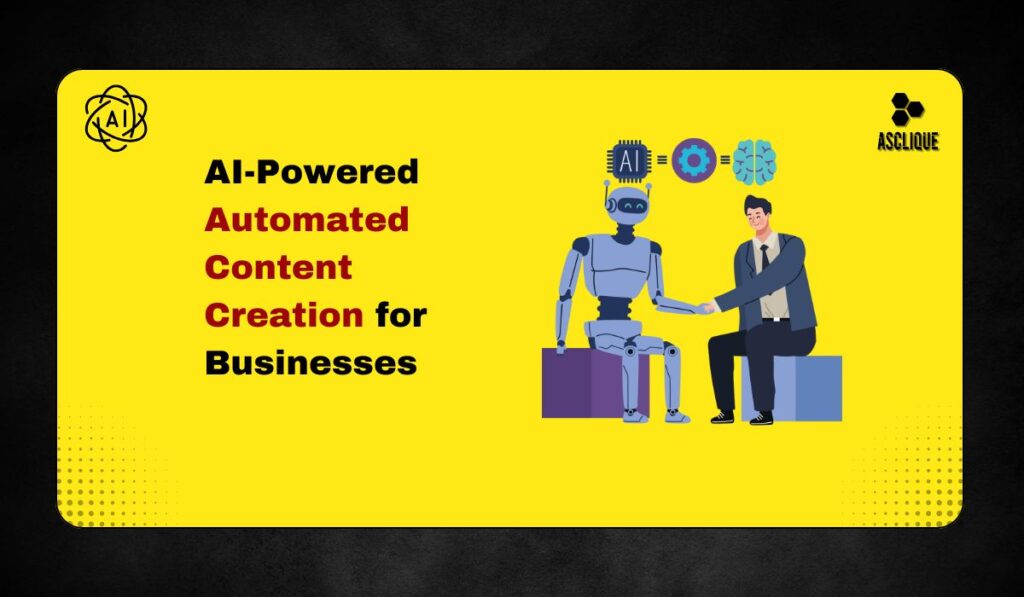
Introduction
Content is the backbone of the digital world. From blogs and social media posts to product descriptions and reports, businesses rely on consistent content to connect with audiences. However, creating content manually is time-consuming and resource-heavy. This is where automated content creation steps in—powered by AI and advanced technology. With tools that generate written, visual, and even video content, businesses can now scale faster while saving time and money.
What is Automated Content Creation?
Automated content creation refers to the use of artificial intelligence, machine learning, and natural language processing (NLP) to generate content without (or with minimal) human intervention.
Examples include:
- AI tools writing blog posts or ad copy.
- Automated software generating product descriptions for e-commerce.
- Social media tools schedule and create posts automatically.
It’s not just about speed—it’s about smarter, data-driven content.
The Role of AI in Content Creation
Artificial intelligence is the driving force behind automated content creation. AI tools analyze data, learn language patterns, and generate human-like text, visuals, or videos.
For instance, large language models (LLMs) like GPT can generate entire articles in seconds. AI algorithms can also design graphics, edit videos, and even create audio content.
This blend of creativity and technology enables businesses to streamline workflows and deliver content at scale.
How Automated Content Creation Works
The process involves multiple technologies:
- Input Data: The user provides a topic, keyword, or outline.
- AI Processing: Algorithms analyze the request and structure.
- Content Generation: NLP models generate text, while other AI models create visuals or videos.
- Optimization: Tools check grammar, SEO, and readability.
- Publishing: Content is scheduled or uploaded automatically.
This workflow reduces hours of manual work into minutes.
Benefits of Automated Content Creation
Speed and Efficiency: AI can generate 1,000+ words in seconds, compared to hours for humans.
Cost Savings: Businesses save on hiring large content teams, making it ideal for startups.
Consistency and Accuracy: AI maintains consistent tone, grammar, and branding.
Scalability: Whether you need 10 product descriptions or 10,000, automated tools handle it efficiently.
Use Cases of Automated Content Creation Across Industries
- Digital Marketing: AI tools create blog posts, ad copy, and landing page content at scale.
- E-Commerce: Product descriptions, catalog updates, and customer emails can be automated.
- News & Media: Automated journalism generates reports, summaries, and real-time updates.
- Finance & Reports: AI prepares financial summaries, stock market updates, and analytics reports.
- Healthcare & Education: Patient guides, FAQs, study notes, and learning modules are easily automated.
Types of Automated Content Creation Tools
- AI Writing Assistants: Tools like Jasper, Copy.ai, and ChatGPT generate articles, ads, and blogs.
- Social Media Automation: Platforms like Buffer and Hootsuite schedule and auto-create posts.
- Video & Visual Content Generators: AI video tools (e.g., Synthesia) and design platforms (e.g., Canva AI) make content creation easy.
- SEO Content Optimization Tools: Tools like SurferSEO or Clearscope analyze keywords and optimize AI-written content.
The Technology Behind Automated Content Creation
- Natural Language Processing (NLP)
- Allows machines to understand and generate human-like text.
- Machine Learning Algorithms
- Improve content quality by learning from user feedback and big data.
- Data Analysis & Predictive Modeling
- Aids AI in producing data-driven content and predicting popular subjects.
- Generative AI (Large Language Models)
- Models like GPT, Bard, or Claude generate high-quality, natural-sounding content.
Challenges and Limitations
- Content Quality & Creativity Concerns
- AI struggles with originality and deep creativity.
- Plagiarism & Authenticity Risks
- AI-generated text can sometimes replicate existing content.
- Ethical & Bias Issues
- AI may unintentionally generate biased or inaccurate content.
- Human Oversight Still Needed
- AI can assist, but human editing ensures brand voice and accuracy.
Future Trends in Automated Content Creation
- Multimodal AI (text, video, audio)
- AI will generate not only text but also video and voice simultaneously.
- Personalized Content at Scale
- AI will deliver customized messages for each customer.
- Voice & Conversational AI Content
- Tools will create podcasts and voice assistants’ scripts.
- Integration with Marketing Automation
- Seamless AI-powered workflows will combine email, SEO, and social campaigns.
How Businesses Can Leverage Automated Content Creation
- Start Small: Automate simple tasks like product descriptions or social posts.
- Blend Human + AI: Let humans edit and be creative while AI handles drafts.
- Be mindful of SEO: Use AI in conjunction with SEO tools to raise rankings.
- Test & Measure: Track performance to refine AI usage.
Businesses adopting automated content creation early gain a competitive edge in productivity and customer engagement.
Conclusion
The future of digital marketing and communication lies in automated content creation, which is no longer merely a fad. Powered by AI, businesses can now generate high-quality content at speed and scale, without breaking budgets.
However, while AI handles efficiency, human creativity remains vital to ensure authenticity, strategy, and emotional connection.
As the technology behind automated content creation continues to evolve, businesses that embrace AI-driven tools will stay ahead, create smarter campaigns, and achieve sustainable growth in the digital era.