
In 2026, businesses are more focused on results than ever before. Every brand wants better leads, more sales, and higher returns on marketing spend. A lot of people have an important question because of this:
Performance Marketing vs. Digital Marketing?
Both are powerful marketing approaches, but they work in different ways. This article explains the meaning, benefits, differences, and future of Performance Marketing vs. Digital Marketing in simple terms so you can clearly decide which one is right for your business.
What Is Digital Marketing?
Digital marketing is a broad term that includes all marketing activities done using the internet and digital platforms.
It focuses on building brand awareness, online presence, and long-term growth.
Common Digital Marketing Channels
- Search Engine Optimization (SEO)
- Social Media Marketing
- Content Marketing (blogs, articles, guides)
- Email Marketing
- Website Marketing
- Online Branding
- Paid Ads (Google Ads, Facebook Ads)
Main Goal of Digital Marketing
The main goal is to reach people online, build trust, and grow a brand over time.
Digital marketing does not always focus on instant sales. Instead, it helps customers:
- Learn about your brand
- Trust your business
- They will think of you again when they need your service or goods
What Is Performance Marketing?
Performance marketing is a results-driven marketing approach. You only pay when a certain thing takes place.
These actions can include:
- Clicks
- Leads
- Sales
- App installs
- Sign-ups
Common Performance Marketing Channels
- Google Ads (PPC)
- Facebook & Instagram Ads
- Affiliate Marketing
- Influencer Marketing (performance-based)
- Display Ads with conversions
- Retargeting Ads
Main Goal of Performance Marketing
The goal is measurable results and ROI (Return on Investment).
Every campaign is tracked, measured, and optimized for performance.
Key Difference Between Performance Marketing and Digital Marketing
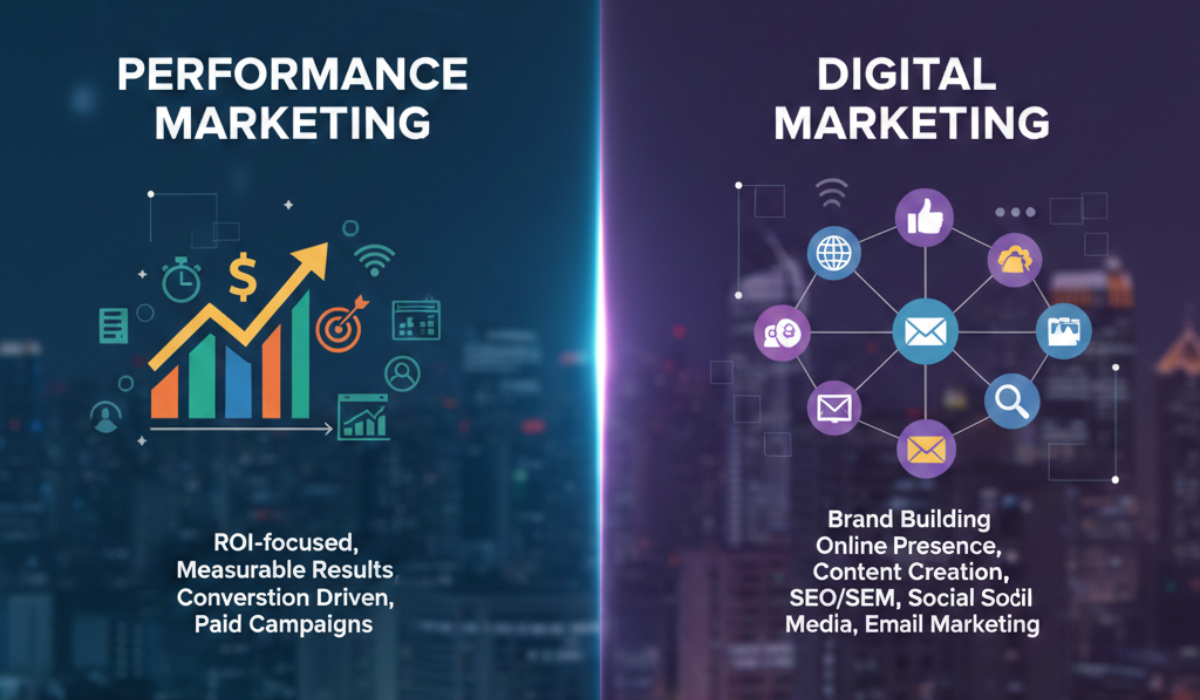
| Feature | Digital Marketing | Performance Marketing |
| Focus | Brand building & growth | Sales, leads & actions |
| Results | Long-term | Immediate |
| Cost Model | Fixed or mixed | Pay for results |
| Measurement | Partially measurable | Fully measurable |
| Time to See Results | Takes time | Fast |
| Strategy Type | Broad & ongoing | Targeted & data-driven |
Benefits of Digital Marketing in 2026
Digital marketing is still very important in 2026, especially for businesses that want long-term success.
- Builds Brand Trust: Customers trust brands they see often on Google, blogs, and social media.
- Improves Online Visibility: SEO and content marketing help your website rank on search engines for years.
- Cost-Effective in the Long Run: Once your content ranks well, you get free organic traffic.
- Supports All Business Types: Digital marketing works for startups, local businesses, and large companies.
- Creates a Strong Online Presence: A well-optimized website, active social media, and quality content make your brand credible.
Benefits of Performance Marketing in 2026
Performance marketing has grown rapidly because businesses want quick and trackable results.
- Pay Only for Results: You spend money only when a desired action occurs.
- Fast Lead Generation: Perfect for businesses that need immediate sales or inquiries.
- Easy to Track ROI: You know exactly where your money goes and what you earn from it.
- Highly Targeted Ads: Ads are shown to people based on age, location, interests, and behavior.
- Easy to Scale: If a campaign works, you can increase the budget and grow faster.
Which Is Better for Small Businesses in 2026?
For small businesses, both strategies matter, but the choice depends on goals.
- If you want quick leads and sales, → Performance Marketing
- If you want long-term growth and brand authority, → Digital Marketing
Best Option: Combine both
Use performance marketing for quick results and digital marketing to build a strong foundation.
Which Is Better for Startups in 2026?
Startups often have limited budgets and need fast validation.
- Performance marketing helps test products quickly
- Digital marketing builds credibility and trust
Smart Startup Strategy:
- Run paid ads for early traction
- Invest in SEO and content for future growth
Performance Marketing vs. Digital Marketing: Cost Comparison
- Digital marketing costs less over time but needs patience
- Performance marketing costs more per click or lead but delivers fast outcomes
In 2026, ad costs are increasing, so relying only on paid ads can be risky. That’s why organic digital marketing is still valuable.
SEO in 2026: A Part of Digital Marketing
SEO remains one of the strongest digital marketing strategies in 2026.
Why?
- People still search on Google
- Organic results are trusted more than ads
- SEO drives consistent traffic
SEO supports performance marketing by:
- Lowering paid ad costs
- Improving landing page quality
- Increasing conversion rates
Future Trends in 2026
Digital Marketing Trends:
- Voice search optimization
- Helpful, people-first content
- Brand authenticity
- Long-form educational content
Performance Marketing Trends:
- AI-powered ad optimization
- Smarter retargeting
- Conversion-focused landing pages
- First-party data usage
Both marketing styles are evolving, not replacing each other.
Which One Should You Choose in 2026?
Choose Digital Marketing:
- You want brand authority
- You focus on long-term growth
- You want organic traffic
- You want to build trust
Choose Performance Marketing:
- You want quick sales
- You need fast leads
- You have clear conversion goals
- You want measurable results
Use Digital Marketing + Performance Marketing together
This balanced approach delivers both short-term revenue and long-term stability.
Conclusion
In 2026, the real question is not performance marketing vs. digital marketing, but how to use both wisely.
Digital marketing builds your brand, authority, and online presence.
Performance marketing drives instant results, leads, and sales.
Businesses that combine both strategies will:
- Grow faster
- Spend smarter
- Stay competitive
- Build trust and profits together
If you want success in 2026, don’t choose one—use both the right way.
FAQ’s
What is the main difference between performance marketing and digital marketing?
Performance marketing focuses on measurable results like clicks, leads, or sales, where you pay for actions. Digital marketing is broader and includes brand building, SEO, content, and social media to create long-term online visibility and customer trust.
Is performance marketing better than digital marketing in 2026?
Performance marketing is better for quick results and immediate sales, but it is not always the best long-term solution. Digital marketing remains important in 2026 because it builds brand authority, organic traffic, and trust, which reduces dependency on paid advertising.
Can small businesses use both performance marketing and digital marketing?
Yes, small businesses should use both strategies together. Performance marketing helps generate fast leads and sales, while digital marketing supports long-term growth through SEO, content, and brand awareness. This combination creates steady results and better return on investment.
Which marketing approach is more cost-effective in the long run?
Digital marketing is more cost-effective over time because SEO and content continue to bring traffic without ongoing ad spend. Performance marketing can become expensive as ad costs rise, especially if campaigns are not optimized properly for conversions and targeting.
Is SEO part of digital marketing or performance marketing?
SEO is a core part of digital marketing. It helps websites rank higher in search engines, attract organic traffic, and build trust. While SEO supports performance marketing by improving conversions, it mainly focuses on long-term visibility rather than immediate paid results.
What type of businesses benefit most from performance marketing?
Businesses that need quick leads, fast sales, or short-term campaigns benefit most from performance marketing. This includes startups, eCommerce brands, service providers, and companies launching new products who want measurable and immediate results.
Will digital marketing still be relevant in the future?
Yes, digital marketing will remain relevant in the future. People will continue to search online, read content, and engage with brands on digital platforms. Strong digital marketing helps businesses build credibility, loyalty, and long-term growth in a competitive market.