
Hybrid work magnifies small misfires: today’s knowledge worker loses about 5.3 hours every week waiting for a teammate’s clarification—enough to erase an entire working month each year.
It’s no wonder 76 percent of employers now lean on skills or personality assessments to uncover friction sooner.
This guide compares seven leading team-personality assessment tools—from quick, team-first platforms like TeamDynamics to research heavyweights—so you can match insight depth, cost, and rollout speed to your squad’s needs.
How we picked the seven
We ran every candidate through five screens, the same ones you’d use if the budget came out of your pocket for team-personality assessment tools.
- Scientific validity: Each assessment must publish reliability data (internal-consistency coefficients of α ≥ 0.70 or equivalent) and at least one peer-reviewed study, according to ArabPsychology.com. No evidence, no entry.
- Actionability: Does the report tell you what to do at tomorrow’s stand-up? We favor tools that pair every insight with a concrete behavior, template, or playbook.
- Ease of use: Short surveys, self-serve dashboards, and remote-friendly rollouts earn points; 60-minute questionnaires and mandatory consultants do not.
- Cost and scalability: We look for upfront pricing instead of “contact sales,” so readers can benchmark true cost of ownership.
- Fit for purpose: Some tools lift morale fast; others expose leadership derailers. We group options by what they do best so you’re not comparing a morale booster to an executive MRI.
Through that lens, seven team-personality assessment tools made the cut. Below, you’ll see how they stack up.
Quick comparison at a glance
Need the gist fast? Scan the grid to spot each tool’s sweet spot, trade-offs, and price range. Jump into the deeper dives whenever you’re ready.
| Tool | Primary focus | Stand-out strength | Key limitation | Approx. price¹ | Best fit |
| TeamDynamics | 16-type team model | Actionable tips baked into every insight | Younger research base | $29–$39 per user (one-time) | Fast-moving, hybrid squads |
| MBTIonline Teams | Classic 16-type prefs | Universal vocabulary; easy uptake | Limited psychometric rigor | $99.95 per person | Icebreakers, empathy boosts |
| CliftonStrengths | 34 talent themes | Links strengths to engagement | Often needs facilitation | $24.99 (Top 5) – $59.99 (Full 34) | Role alignment, morale lifts |
| Everything DiSC | 4 behavior styles | Memorable, practical framework | Can feel reductive | ≈ $65 per person | Communication tune-ups |
| Hogan Team Report | Traits + derailers + values | Research-grade depth | High cost; consultant required | $200–$400 pp + facilitation | Executive or mission-critical teams |
| Predictive Index | 4 drives + goal match | Ties team profile to strategy | Enterprise subscription | Low five figures / yr | Scaling orgs using people analytics |
| Enneagram | 9 core motivations | Fosters psychological safety | Light empirical support | $12–$20 per person | Trust-building retreats |
¹ Sample retail prices in U.S. dollars. Price figures were gathered from current vendor pages and 2025 industry round-ups.
Lower cost and speed sit on the left side of the table; depth and predictive power rise with the price. Keep that mental map handy as we explore each tool in detail.
TeamDynamics:
TeamDynamics skips the academic detour and gives your squad a mirror in about 15 minutes. Each teammate zips through a short, research-backed assessment that focuses on how your team actually works together—how you communicate, make decisions, and get things done. When the last person clicks submit, a dynamic, shareable report appears. The group lands in one of 16 TeamDynamics types, and every member sees where their own style fits inside that mosaic through a personal CoDynamics profile.
The platform pairs every insight with a next-step nudge. If a reflective team needs more airtime for quiet thinkers, the report suggests a silent brainstorm before stand-up. No facilitator, no calendar math.
Pricing stays simple: $29 for a solo report or $39 per person for teams of 2–20, a one-time payment rather than a subscription. Enterprise and consultant tiers are available on request, and there’s even a free trial version that delivers a sample of the experience. Finance can green-light a pilot quickly.
Because TeamDynamics measures patterns at the team level, it shines when you need fast alignment: onboarding new hires, rebooting a stalled project, or resetting norms after a reorg. Built specifically for modern work teams—tech, consulting, product, operations—it’s designed for action, not introspection. Few team-personality assessment tools convert raw data into Monday-morning behaviors quickly, and none do it with such a lightweight setup. No integrations, no IT, just a clean link and a conversation that starts itself.
MBTIonline Teams:

Many professionals already know their “ENFP” or “ISTJ.” MBTIonline Teams turns that recognition into a self-guided experience for the whole group.
How it works. Each teammate completes the official 93-question MBTI assessment. Results drop into a color-coded grid that shows where introverts, extroverts, thinkers, and feelers cluster at the virtual table. Four micro-learning modules translate those differences into meeting, email, and decision-making tips without a certified facilitator.
Cost and rollout. A flat $99.95 per person for teams of three or more unlocks the assessment, individual reports, and the shared dashboard. Send one link, colleagues finish in a single sitting, and the team view appears as soon as the last result lands.
What to expect (and what to not). Treat MBTI as a conversation starter. Test–retest studies show only about half of people keep the same four-letter type on retake, and links to job performance are weak. Framed as a language for preferences, not a predictor of performance, the tool still sparks quick engagement and empathy.
Best for: teams that need a fast icebreaker or shared vocabulary before a project kickoff. For hard performance analytics, layer on a more data-heavy tool later.
CliftonStrengths:
CliftonStrengths shifts the conversation from “What’s wrong with us?” to “How do we double down on what we do best?” Each teammate answers 177 paired statements in about 30 minutes, then receives a ranked list of 34 talent themes. Most teams start with the Top 5 report to keep things digestible.
The payoff appears when you plot everyone’s themes on a single grid. Patterns jump out: maybe your product pod brims with Ideation but lacks Consistency. Managers can pair complementary strengths, delegate with intent, and explain role moves without guesswork.
Gallup’s research across 1.2 million employees shows strengths-based development drives a 19% jump in sales, 29% boost in profits, and can cut turnover by up to 72%.
Pricing. The Top 5 assessment costs $24.99; unlocking all 34 themes is $59.99. Many teams pilot with Top 5, prove the value, then upgrade high-leverage roles later. The larger investment is facilitation—someone must translate raw scores into daily habits or the insights fade.
Best for: a solid yet under-leveraged crew that needs a morale and productivity lift. This tool pinpoints natural drivers, nurturers, and system builders, then helps you reorganize sprint roles so talent meets task.
EverythingDiSC: decode day-to-day style in one coffee break
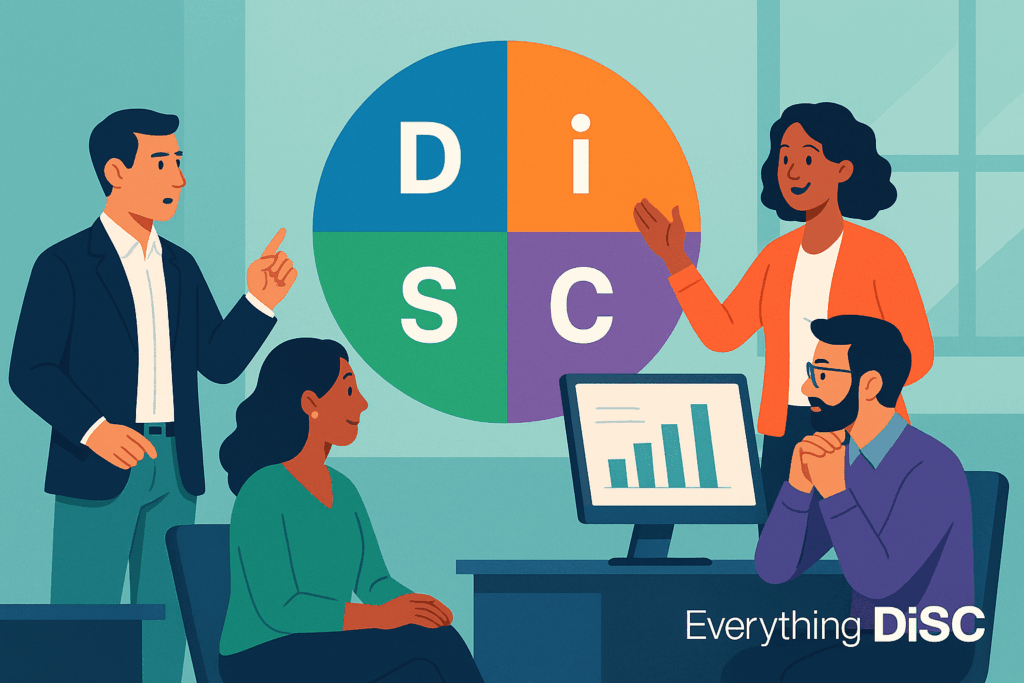
Struggling to balance rapid-fire talkers with methodical thinkers? EverythingDiSC explains why in about 15 minutes. The adaptive survey sorts behaviors into four letters—D, i, S, and C—then plots each teammate on a simple circle anyone can grasp at a glance.
Results live inside Catalyst, an online hub that pairs every style gap with a practical tip. Emailing a high-D colleague? Keep it bullet-point brief. Pitching to a high-C engineer? Bring the data. These micro-nudges turn insight into daily habits.
Pricing. Expect roughly $64–$70 per person for the Workplace profile plus a year of Catalyst access and unlimited one-to-one comparison reports. Static PDFs never expire, so small teams can treat it as a one-time investment.
Trade-offs. Four letters won’t capture deep motivations or derailers, and some teammates may bristle at being “just a high i.” Frame styles as tendencies, not destiny.
Best for: communication friction that slows velocity. This tool delivers a shared language fast and frees meetings from the “why don’t they get it?” loop without a facilitator.
Hogan Team Report:
Some teams need more than a morale boost—they need a hard look at traits that derail projects and careers. That need is Hogan’s specialty. The suite combines three inventories: everyday personality (HPI), derailers under stress (HDS), and core values (MVPI). Feed those scores into the Hogan Team Report, and patterns surface that no icebreaker will reveal.
Imagine a leadership group where six of seven members score high on Bold (overconfidence). The report predicts likely outcomes—rubber-stamped ideas, slipping follow-through, clashing egos—and recommends guardrails like appointing a devil’s advocate or routing approvals through a high-Prudence voice.
Investment. Plan for $200–$400 per participant for the three inventories, plus a certified-consultant debrief. Each person spends about 45 minutes on the assessments, and the team should reserve at least half a day to unpack results. In merger integrations or succession planning, where one misstep carries million-dollar consequences, many leaders consider the cost worthwhile.
Cultural fit. The language is clinical and blunt (“Excitable derailment risk” can appear next to someone’s name). Leaders must frame results as shared vulnerabilities, not ammunition, to preserve psychological safety.
Think of Hogan as the MRI among team-personality tools. You skip it for a minor sprain and choose it when the stakes call for a full diagnostic before surgery-level decisions.
Predictive Index:
The Predictive Index (PI) stands out because the same six-minute adjective checklist builds both your hiring pipeline and your team-development roadmap. Each employee’s four-factor behavioral profile lives inside a central talent graph, ready for redeployment long after day one.
Team Discovery converts those profiles into a live heat map. Set a goal such as innovation, precision, or speed to market, and PI overlays your squad’s drives against that target. If the chart shows high Patience and Formality while you chase rapid iteration, the gap appears quickly, and the platform suggests role tweaks or hiring targets to close it.
Pricing. PI is sold as an annual subscription that scales with headcount; mid-size firms report low five-figure contracts covering unlimited assessments, a cognitive test add-on, and admin dashboards. The model fits when HR already uses PI for recruiting, but it may feel expensive for a single project team.
What you’ll need. Interpreting the data requires an internal “talent optimizer.” PI trains these champions to run workshops and translate colorful quadrants into action. Without that guide, managers may admire charts yet change little.
Best for: organizations that want one language from résumé screen to quarterly retrospective. This tool keeps people’s analytics consistent, helping you steer teams with the same precision you apply to budgets.
Enneagram:
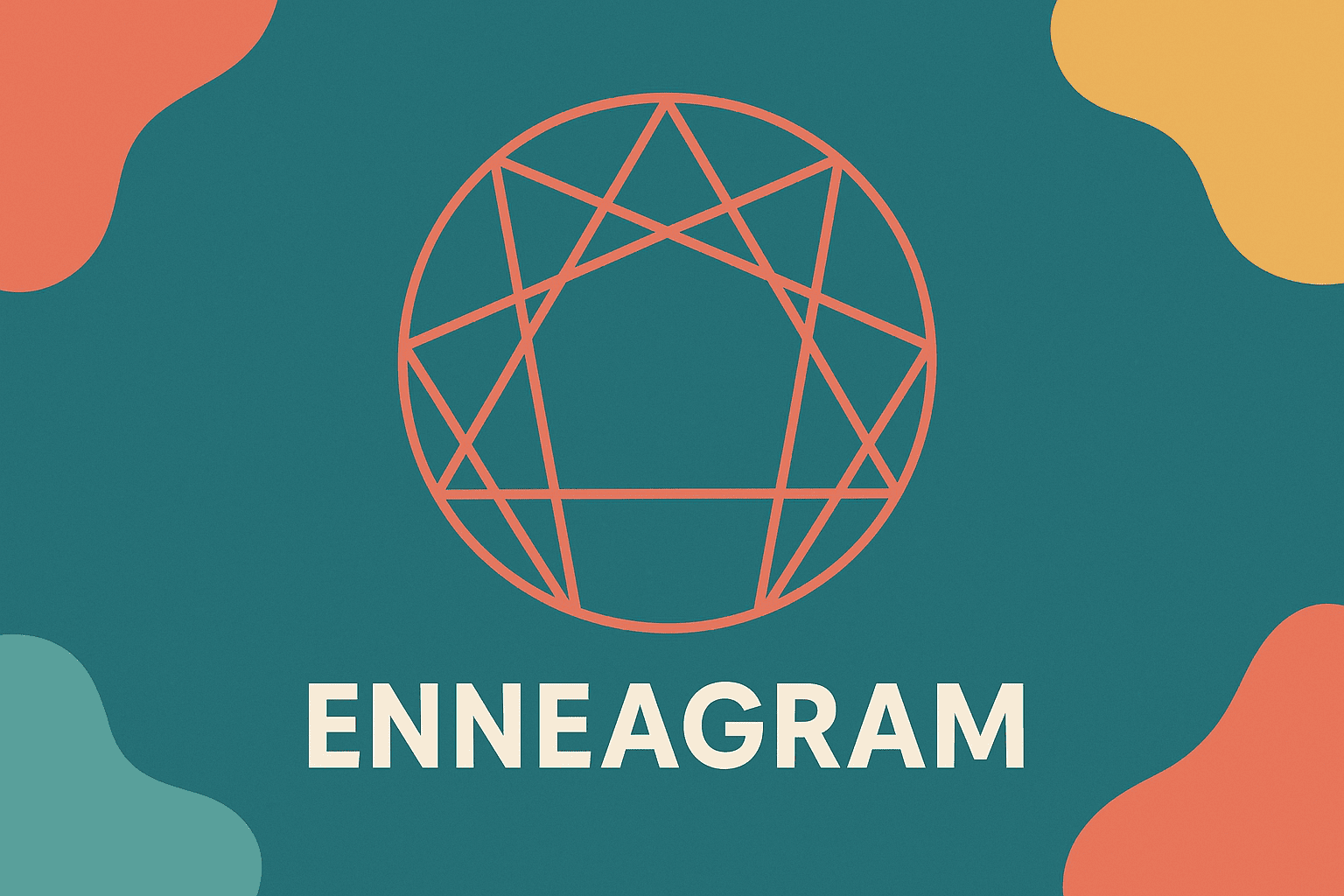
The Enneagram maps the fears and motivations that drive behavior. Its nine types—Reformer, Helper, Achiever, Individualist, Investigator, Loyalist, Enthusiast, Challenger, and Peacemaker—explain why one teammate perfects slides while another avoids confrontation.
A standard RHETI test takes about 40 minutes and costs $20 per person, with bulk rates dropping to $14–$10 for larger teams. The real work begins after the scores arrive: sharing motivations invites vulnerability. A Type 6 Loyalist may ask for clear backup plans, while a Type 7 Enthusiast admits boredom sparks task-hopping. Recurring tensions start to feel predictable, not personal.
Because the model leans on self-reflection rather than strict psychometrics, skeptics label it descriptive rather than predictive. Treat it as a narrative framework, and its value emerges. Teams use the insights to design feedback rituals, create conflict norms, and adjust meeting agendas to suit different comfort zones.
Facilitation helps, yet small groups can self-guide with a workbook and a willing first mover. Keep examples anchored in work: how each type prefers critique, deadlines, and celebrations. Done well, the payoff is trust; colleagues feel seen for the why behind their quirks, smoothing collaboration long after the workshop ends.
Choose this tool when deadlines are stable and trust feels thin. The Enneagram won’t forecast KPIs, but it can unlock the candor you need to chase them together.
What’s next: three trends reshaping team assessments
- AI-powered nudges move insight into the workstream: Tools like Microsoft Viva Glint now send “nudge” messages in Teams that remind managers to share survey results or select a focus area after a pulse closes. Humu and other startups offer similar Slack integrations. Real-time coaching is convenient, yet it raises questions about privacy and algorithmic bias, so favour vendors that publish validation or fairness studies rather than marketing copy.
- Pulse surveys and trait data are converging: Engagement platforms such as Culture Amp pair weekly or monthly pulse checks with deeper personality or strengths data to reveal whether a workshop actually lifts scores over time. Continuous feedback closes the loop that once stalled after an off-site and keeps your team-personality assessment tools relevant between retests
- Market consolidation accelerates: Larger suites continue to buy niche assessment startups. Limeade acquired TINYpulse for $8.8 million, folding its pulse surveys into a broader well-being platform, while 15Five absorbed Emplify to build a single engagement-plus-performance product. Expect your HR stack to bundle assessments the way CRMs absorbed email automation years ago. If you’re choosing vendors today, look for open APIs; otherwise, lock-in looms when the next merger arrives.
Bottom line: whether you’re shopping for AI nudges, continuous pulses, or all-in-one suites, verify the science, check the roadmap, and insist on exportable data before you sign.
How to choose the right tool for your team
- Start with the goal. Pinpoint the pain you need to solve this quarter.
- Deadlines slip because debates drag on? Pick a communication fixer such as Everything DiSC or TeamDynamics.
- Morale feel flat? A strengths-based option like CliftonStrengths can spark energy.
- Leading a merger or board-level turnaround? The depth of Hogan earns its price tag.
- Check the budget.
- Under $500: a ten-person team can complete TeamDynamics, DiSC, or CliftonStrengths Top 5.
- Low five figures: enterprise platforms like Predictive Index bundle hiring, development, and analytics.
- $3,000+ plus facilitation: reserve Hogan for high-stakes work where one bad decision costs more than the assessment.
- Factor in time.
- Need insight before next week’s sprint? Choose a survey that takes under 20 minutes and delivers instant dashboards (TeamDynamics, DiSC).
- Planning an off-site? Use the extra hours for a facilitated deep dive.
- Gauge appetite for vulnerability.
- Open cultures often thrive on Enneagram’s storytelling lens; data-driven skeptics may prefer tools with strong validity studies and clear ROI. For a step-by-step worksheet on scoping needs, integration requirements, and shortlisting options, this guide to choosing team collaboration assessment tools offers a concise checklist you can run with your leadership team.
Conclusion
Apply these four filters—goal, budget, time, and culture—and the right team-personality assessment tool will stand out. The perfect choice isn’t the most scientific or the cheapest; it’s the one your team will actually use and act on Monday morning.
In 2025’s hybrid, high-velocity workplace, the winning tools are the ones that turn insight into habit. Whether it’s TeamDynamics nudging quiet thinkers into airtime, CliftonStrengths mapping untapped potential, or Hogan surfacing blind spots before they explode, the impact lies in what happens after the dashboard appears.
Start small: pilot one tool with a single squad, run the debrief, and document what changes. Did meetings tighten? Did empathy rise? Did clarity improve? Then scale what works.
Remember that every framework—no matter how rigorous—loses power without reinforcement. Pair your chosen assessment with lightweight rituals: a “strengths check-in” at sprint review, a “communication stretch” prompt in Slack, or quarterly retakes to capture growth. Over time, these micro-habits build a shared operating language stronger than any one-time workshop.