
Creating a strong social media presence isn’t all about posting regularly — it’s about posting with intention. One of the most simple yet effective strategies is the 50 30 20 rule for social media. This rule of content assists businesses, creators, and brands in finding the ideal balance among providing value, engaging people, and advertising their services.
Let’s get into what this rule entails, how it applies in the real world, and why it’s a great tool in your digital marketing plan.
What Is the 50 30 20 Rule for Social Media?
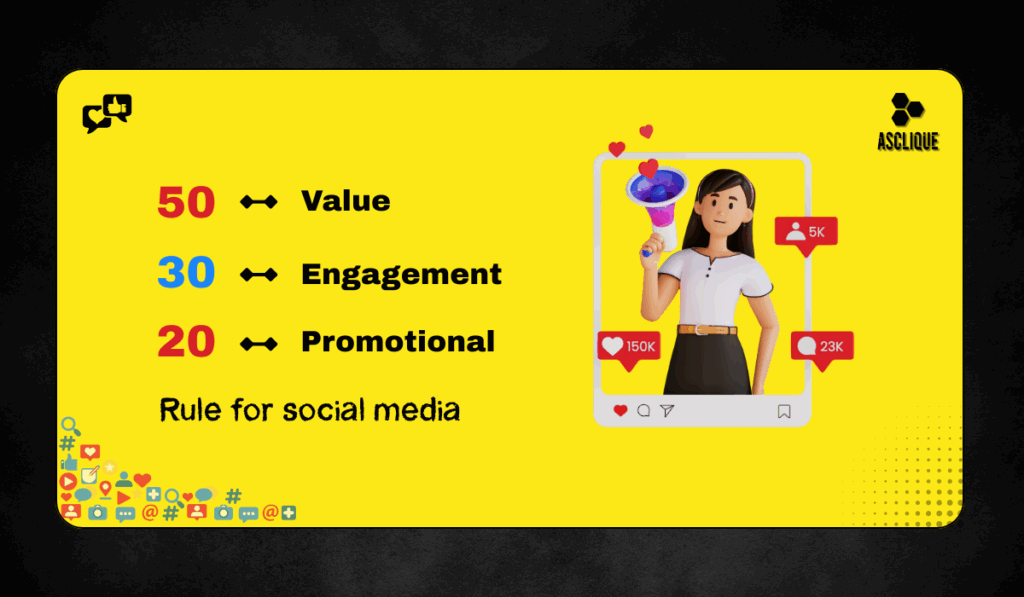
The 50 30 20 rule for social media breaks down your content strategy into three simple categories:
- 50% Informative or Value-Based Content
- 30% Engaging or Conversational Content
- 20% Promotional or Sales Content
This structure is designed to make your audience feel like they’re getting something valuable from you, while also giving your brand space to connect and promote without overwhelming them.
Think of it this way — you wouldn’t want to be around someone who only talks about themselves. The same applies to your brand on social platforms.
1. 50% Value-Driven Content: Educate, Solve, or Inspire
This is the most important slice of your content. Half of everything you post should aim to educate, inform, entertain, or inspire your audience. These posts should answer questions, solve small problems, or offer practical insights without asking for anything in return.
Real-Life Examples:
- A fitness coach shares simple 5-minute workout tips
- A small business posts “how we make our products” videos
- A marketer explains algorithm updates in plain language
Topics You Can Cover:
- Tips and tricks
- FAQs
- “How-to” posts or tutorials
- Industry news and trends
- Case studies
- Inspirational quotes or stories
Why It Works:
According to Demand Metric, content marketing generates 3x more leads than traditional advertising and costs 62% less. People follow brands that teach them something or make their life easier. When you position yourself as a helpful resource, you’re building long-term trust.
2. 30% Engagement-Oriented Content: Spark Conversations
The second pillar is engagement. These are the posts where you invite your audience to interact — not by selling something, but by making them feel involved, heard, or appreciated.
Real-Life Examples:
- A brand asking “What’s your weekend plan?” in an Instagram Story
- Polls and quizzes
- “Caption this photo” or “This or That” posts
- Sharing user-generated content
- Personal stories that create emotional connections
Why It Matters:
People are more likely to engage when content feels relatable or personal. Research from Sprout Social shows that 57% of consumers are more likely to buy from brands they feel connected to.
And here’s something many brands miss: more engagement = better reach. Social algorithms love content that gets comments and shares. So even if these posts don’t directly promote anything, they boost your visibility and credibility.
3. 20% Promotional Content: Sell, But Don’t Overdo It
Finally, just 20% of your content should be directly promotional. That includes:
- Announcing new products or services
- Limited-time offers or sales
- Sign-up CTAs
- Client testimonials and reviews
- Event promotions
- Booking links or lead capture forms
Yes, this is the content that helps drive conversions — but if you post only this kind of content, you’ll likely see lower engagement. Users don’t like being sold to all the time. Instead, let the trust you build in the other 80% of content do most of the selling for you.
Smart Promotion Tips:
- Pair promotional posts with a helpful message or offer
- Include social proof or success stories
- Use urgency only when it’s real (limited stock, flash sale, etc.)
- Avoid using salesy language in every sentence
Why This Rule for Social Media Actually Works
You might be wondering: why follow this rule when you could just post what you want?
Here’s the truth — consumers don’t want to be bombarded with ads. They want value, relevance, and authenticity. The 50 30 20 rule for social media isn’t just about balance — it’s about being strategically human.
Here’s what makes it effective:
- It’s based on psychology. We connect more with people who show interest in us, not just themselves.
- It supports long-term growth. You attract and retain more followers by giving them consistent value.
- It aligns with platform algorithms. Instagram, Facebook, LinkedIn, and even X prioritize content that sparks conversations and keeps people engaged.
Applying the Rule: A Weekly Example
Let’s say you post 15 times a week across your social channels. Here’s how to structure that:
| Type of Post | Percentage | Number of Posts |
| Value-Based Content | 50% | 8 Posts |
| Engagement Content | 30% | 4 Posts |
| Promotional Content | 20% | 3 Posts |
If you only post 5 times a week? Stick to 3 value-based posts, 1 engaging post, and 1 promo.
How to Create Balanced Content Without Overthinking
Feeling overwhelmed? Here’s how to make it easier:
- Use a Content Calendar: Plan your content types ahead of time to stay consistent.
- Batch Content Creation: Film or write value posts in batches. It saves time.
- Mix Formats: Don’t just stick to text. Use videos, carousels, reels, and stories.
- Look at Insights: Check what your audience actually engages with. Adjust your mix accordingly.
Tools to Help You Stay on Track
A few useful tools that make following this rule easier:
- Canva for quick content creation
- Buffer or Hootsuite for scheduling
- Notion or Trello for managing your content calendar
- Google Analytics and Instagram Insights for performance tracking
Key Stats That Support the Rule
Still not sure if this rule is worth following? These numbers tell the story:
- Posts that add value rather than sell see 2x the engagement (HubSpot).
- Brands that build relationships through conversation enjoy 33% higher customer retention (Sprout Social).
- 80% of users are more likely to evaluate solutions from a brand they follow on social media (MarketingSherpa).
Mistakes to Avoid When Using This Rule
While this rule for social media is simple, it’s easy to misuse if you’re not careful.
Avoid These Common Pitfalls:
- Using every post to promote something — it defeats the whole purpose
- Copying competitors without adding your brand voice
- Posting value content without clear takeaways
- Not replying to comments on your engagement posts
- Inconsistent scheduling — balance only works with consistency
Conclusion
In a world of content overload, standing out on social media means doing more than just showing up. You need to show up with intention and balance. The 50 30 20 rule for social media helps you build trust, start conversations, and grow a community — not just an audience.
By focusing 50% on value, 30% on engagement, and just 20% on promotion, you give your followers exactly what they want: real, human content that informs, relates, and occasionally sells.
Use this rule as your guide to smarter, more authentic content. Your audience (and your metrics) will thank you for it.
FAQ’s
Can I change the 50 30 20 ratio to fit my brand’s goals?
Yes. When you’re in launch mode or campaigning, you can modify it slightly (such as 40 30 30), but don’t go overboard on promotions in the long-term.
Does this rule apply to all social platforms?
Absolutely. Whether you’re posting on Instagram, LinkedIn, or YouTube, the rule easily translates across platforms. Simply adjust the format of the content.
How can small businesses apply this rule with limited resources?
Begin with basic content — FAQs, behind-the-scenes pictures, polls, and brief tips. Consistency is more important than perfection.
What’s the biggest benefit of using this rule for social media?
It will build trust and engagement over time — the two most important factors for any successful online presence.