
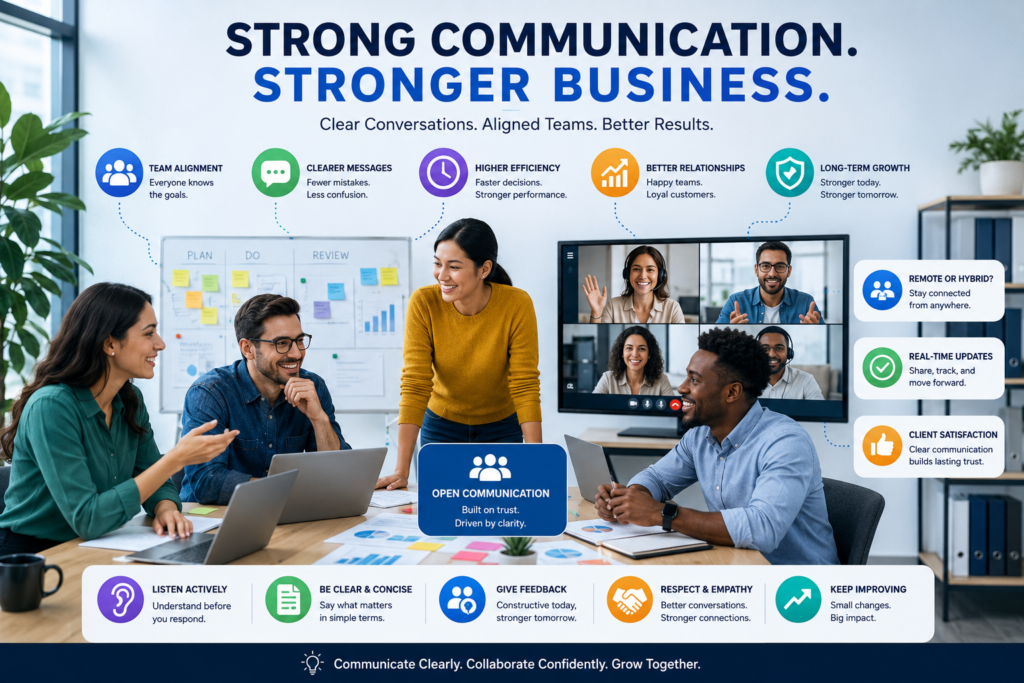
Running a business involves keeping many moving parts aligned. When team members fail to share information clearly, operations quickly break down.
Misunderstandings drain time and resources from an organization. Clear interactions lay a strong foundation for steady growth and long-term stability.
The Foundation Of Team Alignment
Clear conversations help everyone understand their daily responsibilities. Teams function better when objectives are straightforward. This clarity prevents people from overlapping duties or dropping projects completely.
Misaligned expectations can quickly break a workplace culture. Using unified communication tools such as Gamma Communications helps teams stay consistently connected throughout the work week, ensuring that discussions, updates, and decisions remain accessible across departments. This connection supports coordination between remote and on-site employees working toward the same corporate targets.
Daily interactions shape how people handle unexpected challenges. Solid sharing practices keep everyone working toward identical goals. Chaos drops significantly when messaging remains consistent.
Reducing Workplace Misunderstandings
Mixed messages confuse the factory floor and corporate offices. Mistakes happen when staff members guess what managers mean. Clear guidance eliminates the guesswork that hurts daily productivity.
One education platform noted that clear interactions prevent costly errors and minimize conflict, lifting employee morale. Teams work better when they do not argue over vague instructions. This balance saves businesses substantial amounts of money each year.
Simple check-ins can prevent minor issues from turning into massive corporate arguments. Leaders who speak plainly build trust across their departments. Open channels keep workflows smooth.
Adapting To Modern Work Settings
Remote employment changed how offices operate daily. Staff members now log in from different cities and time zones. Managing these setups requires intentional strategies to prevent isolation. A global language school stated that clear exchange is more critical than ever in modern, fast-paced, hybrid work environments.
Distributed staff members need reliable methods to share project updates. Without these methods, projects stall out. Modern systems bridge the physical distance between team members.
Managers can track progress without micro-managing their staff. Success depends on selecting the correct platform for everyday interactions. Strong communication habits keep remote teams aligned, productive, and connected across every location.
Boosting Operational Efficiency
Speed matters when responding to market changes or client demands. Delayed information slows down decision-making processes across the board. Quick updates allow departments to pivot without losing valuable momentum.
Internal operations run much more smoothly when files and concepts move freely. Employees spend less time searching for answers when data is accessible. This efficiency directly impacts the bottom line.
Organizations that prioritize direct talking points see fewer missed deadlines. Projects move from planning to execution without hitting unnecessary roadblocks. Time saved translates directly into higher output.
Attracting Top Workplace Talent
Job seekers look for organizations that value transparent leadership. Interviews provide a preview of how a company treats its workforce. Clear messaging during recruitment builds immediate trust with candidates.
A business language study revealed that 70% of employers view communication as the top skill they look for in job candidates. This statistic shows how much companies value performance-driven skills. Hiring managers look for candidates who express their thoughts clearly.
Strong candidate pools form around brands that speak openly about expectations. New hires adjust faster when onboarding materials are easy to follow. Companies can look for these specific traits during selection:
- Active listening skills during interviews
- Clear writing in cover letters
- Direct answers to complex scenario questions
Strengthening Client Relations
Customers remain loyal to brands that listen to their needs. Clear explanations build trust during sales meetings and support calls. Confusion often drives buyers straight to competitors.
Clear dialogue prevents project delays that frustrate paying buyers. Providing regular updates shows professionalism and respect for client budgets. Happy customers frequently share positive referrals with network contacts.
Resolving customer complaints requires patience and precise wording. Support staff must address issues without using confusing industry jargon. Direct answers turn frustrated buyers into loyal advocates. Consistent communication strengthens every relationship long after the first sale is complete.
Supporting Long-Term Growth
Scaling a business requires solid internal structures. Growth introduces new staff layers that can block info flow. Solid practices keep everyone connected during expansions.
Executives need reliable data to map out future investments. Clear reports from department heads feed these strategic decisions. Misinformation at the top leads to bad investments.
Companies that talk openly navigate changing markets with ease. Staff members feel secure when leaders share corporate shifts early. This transparency builds long-term resilience against economic shifts. Consistent communication gives every department the confidence to grow without losing direction.
Clear interaction keeps modern companies moving forward. Clear phrasing removes confusion and helps teams hit their targets.
Investing in proper systems protects corporate health. Strong habits build a foundation for lasting market success.
FAQs
Why is communication important in the workplace?
Communication helps employees understand their responsibilities, align with company goals, and collaborate effectively. Clear communication reduces errors, improves productivity, and supports stronger team relationships.
How does poor communication affect business performance?
Poor communication can lead to misunderstandings, missed deadlines, duplicated work, employee frustration, and customer dissatisfaction. These issues can increase costs and reduce overall efficiency.
What are the benefits of communication tools for businesses?
Communication tools help teams share information quickly, collaborate in real time, track project updates, and stay connected regardless of location. They improve coordination and decision-making across departments.
Why is communication especially important for remote and hybrid teams?
Remote and hybrid teams rely on clear communication to stay aligned, share updates, and maintain collaboration. Effective communication helps prevent isolation, confusion, and project delays.
How does effective communication improve customer relationships?
Clear communication helps businesses understand customer needs, provide accurate information, resolve issues efficiently, and build trust. This often leads to higher customer satisfaction and loyalty.
Can strong communication help attract and retain employees?
Yes. Transparent communication creates a positive workplace culture where employees feel informed, valued, and supported. This can improve retention and make the company more attractive to potential hires.
How can businesses improve internal communication?
Businesses can improve communication by using reliable communication platforms, encouraging regular check-ins, setting clear expectations, providing feedback, and fostering an open and transparent work environment.