
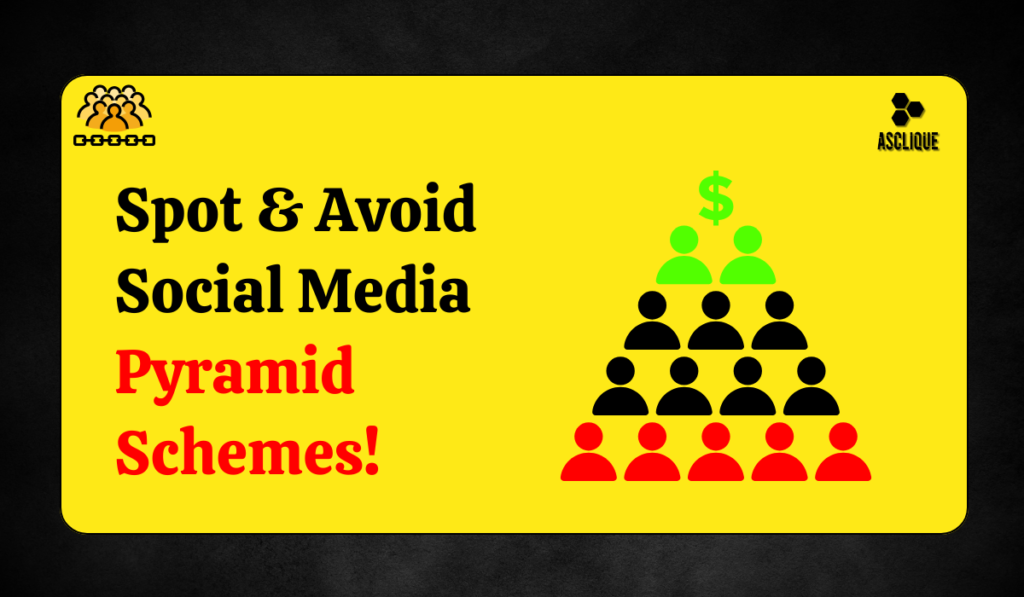
Social media is a great platform for businesses and connections, but also a place where social media pyramid scheme awareness is crucial. A pyramid scheme is disguised with the look of something so legitimate, such as an MLM. Pyramid schemes also use social media for promotion and to gain more followers, even to fool more intelligent users. This understanding of how pyramid schemes operate, how they differ from MLMs, and how they can be detrimental both to influencers and consumers helps everyone.
Let’s break this down and get clear on what to watch out for!
Pyramid Schemes vs. Multi-Level Marketing (MLM): What’s the Difference?
One major problem on social media is that people often get these two confused: pyramid schemes with MLM businesses. In a nutshell, here is the difference:
Multi-Level Marketing: This is an actual business with actual products. One earns money selling the product or service and, in some cases, one makes a bonus if a team is beneath him or her. However, the real remuneration comes from selling, not recruitment. Imagine a regular sales job but with more rewards.
Pyramid Schemes: Pyramid Schemes are illegal because they recruit but do not sell real products. Oftentimes, a scheme does not have an actual product, or, at worst, the product serves to merely legitimize a supposed business venture. Income is obtained through bringing in people in a pyramid scheme to collect money from them; the model collapses since it is not sustainable-it cannot go on indefinitely.
It’s crucial to social media pyramid scheme awareness, so users can avoid these fraudulent schemes disguised as legitimate businesses. Always be cautious when you see offers that promise wealth with minimal effort.
Common Social Media Scams: Beyond Pyramid Schemes
Pyramid schemes are not the only scam that is carried out on social media. There are other types of scams that easily dupe users:
Fake Investment Opportunities
- These involve fake promises on huge returns from investment either in cryptocurrencies or forex trades. They might even throw you a small sum after some time to get to your good books but mainly set up to take a lot more than what it gives back. This sometimes comes in the guise of recruiting other people into getting the benefits, similar to a pyramid scheme.
Phishing Scams
- Bad guys create fake ads or accounts in order to trick you into clicking links that ask for your personal information, which they can then misuse. You might see these ads offering free items, discounts, or “exclusive” deals.
Ponzi schemes
- Ponzi schemes are pyramid schemes except that these schemes promise to pay normal returns to earlier investors regularly. Here, the money of the newer investors gets used to pay the money of the earlier investors. These frauds may be appearing to be legitimate but without any real investment basis.
Influencer-Backed Fraud:
- Backed Scam Some of the influencers unknowingly promote products or schemes and then realize they are some form of scams. Influencers primarily from the sectors of beauty, wellness, and finance receive solicitations from brands wishing to showcase their products for dubious transactions. In many cases, it makes pyramid schemes from social media more accessible for the public as influencers will always command trust from any considerable following.
Job and “Easy Money” Scams
- These are posts offering you “work-from-home” opportunities or “side income” jobs. Many of these require a registration fee or ask you to recruit others. Be very cautious because most of these operate like a pyramid scheme with no actual job involved.
Understanding these common social media pyramid scheme scams can help you avoid getting caught in fraudulent opportunities.
Impact of Pyramid Schemes on Influencers and Social Media Trust
Influencers are the key players in social media, and their influence can actually make the followers choose whatever they like and introduce brands, products, and even opportunities. However, a number of influencers end up promoting pyramid schemes without their knowledge to their followers, thus hurting their reputation.
The influencer may social media pyramid scheme, thinking that his followers will have faith in it because of his research. If he finds out that it’s a scam, his followers feel he has deceived them, and he loses credibility. As a result, people might become wary of influencers at large, even though the majority of them are using their influence to promote honest products.
It is essential to research before jumping into the brand or opportunity for any influencer. This action will not only protect their followers from pyramid schemes but also maintain their credibility.
Are Pyramid Schemes Legal? Busting the Myths
Many people believe that pyramid schemes are legal if there is a product involved. Not true. Pyramid schemes are illegal because they are based on recruitment rather than sales, which is not a viable business model. Here’s how to know if an “opportunity” might be a pyramid scheme:
- Real income is based on sales: In the case of a legal MLM, the income is purely through selling the product to the customers. Income in a pyramid scheme is mostly based on recruiting others instead of sales.
- High Entry Fees: If they charge you a lot to get in, if they force you to invest large amounts of money into “starter kits” that have little to do with any sales, then it is likely a pyramid scheme.
- No Product or Service : Some pyramid schemes are disguised with low quality products and no product whatsoever. Red flag if not easy to look at the worth of the product or it cost too much.
By understanding these myths, you can social media pyramid scheme awareness and avoid falling for scams disguised as legitimate business opportunities.
How to Avoid Falling for Social Media Pyramid Schemes
Pyramid schemes usually possess glossy appeals and effective sales pitches, but there are easy ways to ward off such fraud. Here are the major strategies on how to detect or avoid social media pyramid scheme:
Do Your Research:
- Always research the company carefully before joining any new opportunity. Look for online reviews, complaints from past participants, or a history of legal issues. Look for credible sources that provide details about the company. Also check if the company is registered on reputable consumer protection sites or government databases. In case you can’t find much information, that can be a red flag.
Questions to Ask:
- Any legitimate business will earn most of its money from product sales and not recruiting others. Inquire about what would constitute clear detail about how earnings can be attained. Most pyramid schemes involve ambiguous terms, so be wary if you are not getting straightforward answers for your inquires. Some of the questions to inquire about would be “How does the company make money?” and, “What percentage of income is attributed to sales versus recruiting?”.
High-Pressure Tactics:
- Scammers will often tell you it’s a “limited-time offer” or only “a few spots are left.” Sometimes, they don’t want you to take the time to think this through or do your own research. A real business doesn’t need to force you to make a decision then and there. Take your time, and no one should rush you.
High Joining Fees:
- The most common sign of a pyramid scheme is a large amount of investment, especially in just getting into the program. Most legitimate MLMs charge minimal fees; a high buy-in or ongoing payments is a red flag. If the cost to join or stay in is high, it typically means it relies on money from recruits rather than real sales.
Trust Your Instincts:
- If something feels too good to be true, it probably is. Pay attention to any doubts you have, especially if the opportunity sounds like easy money for little work. Often, your instincts will pick up on red flags that seem “off.” Pyramid schemes tend to promise big rewards for minimal effort, so if you’re feeling uncertain, take a step back and reassess.
Consult others:
- Reach out to some trusted friends or family members for advice, especially to those who might have experience with a similar business model. Sometimes an outside perspective can help you see risks you might have missed. Also, you can use online communities and forums, where people share their experiences with specific companies.
By following these tips, you can social media pyramid scheme awareness and avoid falling into these traps.
Conclusion
Social media is a very good tool, but it can also serve as a place that facilitates the spread of scam activities and, more particularly, pyramid schemes. This will help you be aware of common scams, knowing that the implications for influencers are social media pyramid scheme awareness and safe behavior. Remember, real opportunities don’t rely on constant recruitment or high fees—stay vigilant and protect yourself from falling into these traps.
FAQ’s
What is a social media pyramid scheme?
A social media pyramid scheme is a fraudulent business model promoted through platforms such as Instagram, Facebook, TikTok, LinkedIn, or messaging apps. These schemes typically make money by recruiting new participants rather than through genuine sales of products or services. Participants may be asked to pay joining fees, purchase expensive starter packages, or recruit others to earn commissions. Eventually, recruitment slows down and the structure becomes unsustainable, causing many participants to lose money.
How can you identify a pyramid scheme on social media?
Common warning signs include promises of fast or guaranteed income, a strong emphasis on recruiting new members, high upfront fees, vague explanations about how the business generates revenue, and pressure to join quickly. Another warning sign is when promoters talk extensively about earnings and lifestyle benefits but provide very little information about actual customers, products, or services.
What is the difference between an MLM and a pyramid scheme?
A legitimate multi-level marketing (MLM) business sells genuine products or services to customers, and participants can earn income through those sales. A pyramid scheme primarily depends on recruiting new participants and collecting money from them. Simply having a product does not automatically make an opportunity legitimate. The way the company generates revenue and compensates participants is an important distinction.
Are pyramid schemes illegal?
Pyramid schemes are prohibited in many countries because their business model depends primarily on continuous recruitment rather than sustainable sales. Laws and definitions vary by jurisdiction, so consumers should check guidance from the appropriate consumer protection or financial regulatory authority in their country if they are uncertain about a particular opportunity.
Why are pyramid schemes commonly promoted through social media?
Social media allows promoters to reach large audiences quickly and use personal relationships, testimonials, lifestyle content, and influencer marketing to build credibility. A promoter may display expensive purchases, travel, or income claims to make an opportunity appear successful. However, social media posts alone do not prove that a business or investment opportunity is legitimate.
What should I do before joining an opportunity promoted on social media?
Research the company independently instead of relying only on information provided by the person recruiting you. Check how the company generates revenue, what participants must pay, whether customers purchase products without joining the opportunity, and whether earnings depend heavily on recruitment. Search for regulatory actions, consumer complaints, and credible third-party information before providing money or personal information.
What should I do if I think I have encountered a pyramid scheme?
Avoid sending additional money or recruiting other people until you have independently verified the opportunity. Save relevant messages, payment records, advertisements, screenshots, and account information. You can also report suspicious activity to the social media platform and contact the appropriate consumer protection, financial regulator, or law enforcement authority in your jurisdiction if you believe fraud has occurred.