
Expanding into international markets is exciting, but many businesses focus so heavily on translating their website or launching new campaigns that they overlook the SEO fundamentals needed to succeed.
A successful international expansion isn’t just about ranking in another country. It requires understanding local search behavior, creating content that resonates with regional audiences, and ensuring every aspect of your digital presence is optimized for that market.
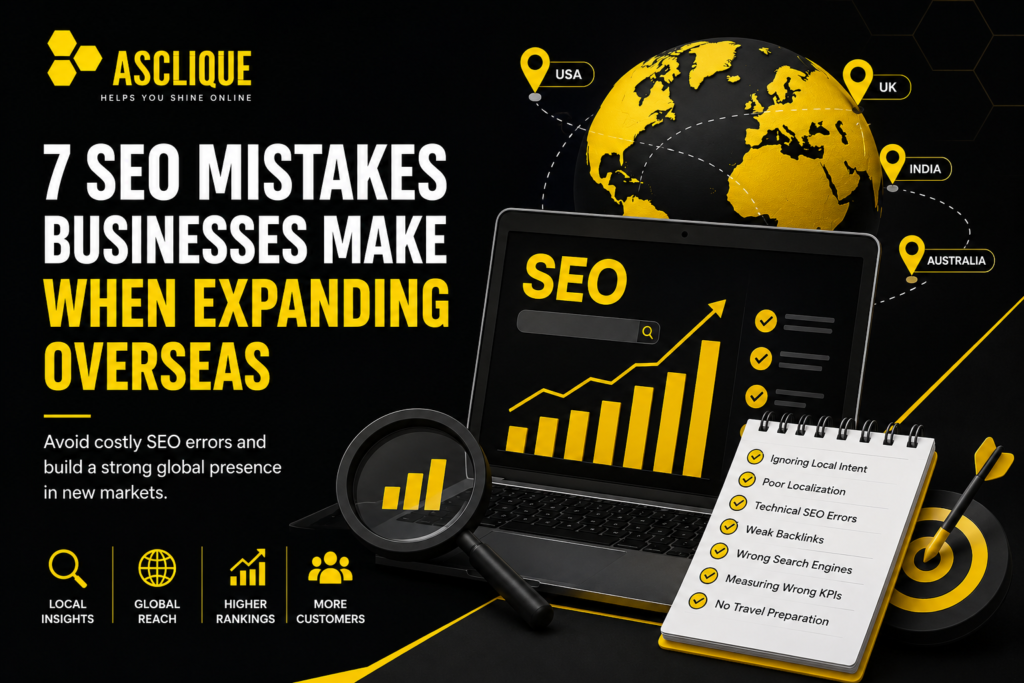
Here are seven SEO mistakes businesses commonly make when expanding overseas and how to avoid them.
1. Ignoring Local Search Intent
Keywords that perform well in one country don’t always have the same meaning or search volume elsewhere.
For example, users in the United States may search for “vacation rentals,” while people in the United Kingdom are more likely to search for “holiday lets.” Simply translating keywords often misses these regional differences.
Always conduct country-specific keyword research instead of relying on direct translations.
2. Treating Translation as Localization
Translating website content is only one part of international SEO.
True localization means adapting your messaging, examples, currency, measurements, imagery, and calls to action for the target audience. Search engines reward content that feels native to local users.
Businesses that invest in localization or Multilingual Websites often achieve stronger engagement and better conversion rates than those using machine-translated content alone.
3. Forgetting Technical International SEO
Many international websites struggle because of technical issues rather than content quality. One of the most common technical mistakes is misunderstanding how canonical tags and hreflang tags work together. While canonical tags help search engines identify the preferred version of a page, hreflang tags tell them which language or regional version should be shown to users. Using them incorrectly can lead to indexing issues and reduced visibility in international search results. Learn more about the differences in our guide on Canonical vs. Hreflang Tags.
Common mistakes include:
- Missing hreflang tags
- Incorrect canonical URLs
- Duplicate content across country versions
- Poor URL structure
- Slow page speed in overseas locations
A technically sound website helps search engines deliver the correct version of your content to users in different regions.
4. Building the Wrong Backlink Profile
Links from websites in your home country may do little to establish authority in a new market.
If you’re targeting Canada, Australia, or Germany, earning backlinks from reputable websites within those countries can strengthen your local relevance and improve rankings.
A localized link-building strategy should be part of every international SEO campaign.
5. Overlooking Offline Preparation for International Expansion
International growth isn’t limited to digital marketing. Many companies eventually travel overseas for client meetings, conferences, trade shows, or partnership opportunities.
While preparing presentations, marketing materials, and sales strategies, don’t overlook practical travel requirements. Something as simple as renting a vehicle can become a challenge if your driver’s license isn’t accepted because it’s written in another language.
When a professional translation may be needed, review its format before ordering and click here to see one available option. Some rental companies may accept a professionally translated license when an International Driving Permit cannot be obtained, but requirements vary by country and rental location. Preparing the right documentation before departure can help avoid unnecessary delays during important business trips.
6. Ignoring Local Search Engines and Business Platforms
Although Google dominates many markets, it isn’t the only search engine businesses should consider.
Depending on your target country, users may rely on regional search engines, local business directories, review platforms, or mapping services.
Optimizing your presence beyond Google can significantly improve visibility and brand trust in local markets.
7. Measuring Success Using Only Domestic KPIs
International SEO should be evaluated independently for each market.
Instead of combining all traffic into one report, monitor metrics such as:
- Organic traffic by country
- Country-specific keyword rankings
- Local conversion rates
- Engagement metrics
- Regional backlink growth
This helps identify which markets are performing well and where additional optimization is needed.
Final Thoughts
Expanding into overseas markets requires more than translating a website and launching new campaigns. Businesses that understand local search behavior, invest in proper localization, build regional authority, and prepare both their digital and operational strategies are far more likely to succeed.
International SEO is most effective when every part of the customer journey is considered—from how users discover your business online to how your team supports clients during face-to-face meetings abroad. Small details, including travel preparation and documentation, can contribute to a smoother expansion and a stronger international presence.
FAQ’s
What is international SEO?
International SEO is the process of optimizing your website so search engines can identify the countries and languages you want to target. It helps businesses improve visibility in overseas markets through localized content, technical optimization, and region-specific SEO strategies.
Is translating my website enough for international SEO?
No. Translation alone isn’t sufficient. Effective international SEO also includes keyword research for each market, content localization, hreflang implementation, local backlinks, and technical optimization to match the search intent of users in different countries.
What is the biggest mistake businesses make when expanding overseas?
One of the most common mistakes is assuming that the same SEO strategy will work everywhere. Every market has different search behaviors, competition, language preferences, and cultural expectations that require a localized approach.
How important are local backlinks for international SEO?
Local backlinks help search engines understand that your website is relevant and trustworthy within a specific country. Building links from reputable regional websites can improve rankings and strengthen your online authority in new markets.
Do businesses still need to prepare for international travel when expanding overseas?
Yes. Even with remote meetings, many businesses travel for client meetings, trade shows, conferences, and partnership opportunities. Preparing travel documents in advance can help avoid unexpected delays.
Can I rent a car overseas with a non-English driver’s license?
Requirements vary by country and rental company. Some locations may require an International Driving Permit (IDP), while others may accept a professionally translated driver’s license alongside the original license. It’s always best to check the destination’s regulations and the rental company’s policy before traveling.
How do I measure the success of an international SEO campaign?
Track performance separately for each target market by monitoring country-specific organic traffic, keyword rankings, conversions, engagement metrics, and locally acquired backlinks. This provides a clearer picture of which regions are delivering the best results.